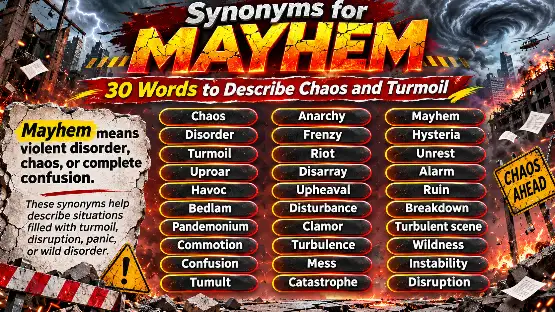
Synonyms for mayhem include chaos, disorder, havoc, turmoil, madness, commotion, and uproar. Mayhem means a wild scene where people or things act with no order and no control. People use it for crowds, storms, parties, and busy places that spin out of control. These words will help you write clear and lively sentences.
Table: Synonyms of Mayhem
| Synonym | Meaning |
| Pandemonium | Wild noise and confusion |
| Bedlam | A loud and crazy scene |
| Anarchy | No rules and no control |
| Tumult | A loud and messy stir |
| Upheaval | A big and sudden shake-up |
| Frenzy | Wild and rushed action |
| Riot | A loud and violent crowd act |
| Disarray | A messy and out-of-place state |
Definition of Mayhem
- Definition: Mayhem means wild disorder, noise, and trouble.
- Example: The loose puppy caused mayhem in the kitchen.
- Intensity: It is a strong word. It feels louder and wilder than “mess” and close to “chaos.”
- Usage note: It describes scenes, events, and crowds. Examples: total mayhem, scenes of mayhem, cause mayhem.
Etymology of Mayhem
- Origin: It comes from the Old French word mehaigne, which meant “an injury” or “a wound.” Before Old French, the source is not clear.
- Other languages: It passed through Anglo-French as mahem before it reached English.
- Period: It entered English in the late 1300s.
- Original sense: English no longer keeps the original sense. The word first named the crime of hurting a person so badly that they could not fight. Now it mostly means wild disorder.
Word Formation of Mayhem
- Root word: The root is the Old French word for “injury” or “wound.”
- Prefix or suffix: English adds no clear prefix or suffix. The word came into English as one whole piece.
- Literal sense: Mayhem literally means “a serious injury.”
- Words with the same root: Maim comes from the same old French source. Both words share the idea of harm.
30 Synonyms for Mayhem
1. Chaos (Noun)
Meaning: Total confusion with no order.
- Chaos filled the hall when the lights went out.
- The kids turned the playroom into chaos.
2. Disorder (Noun)
Meaning: A messy state with no order.
- Disorder spread through the crowd.
- The teacher quickly ended the disorder in class.
3. Havoc (Noun)
Meaning: Wide damage and confusion.
- The storm wrecked the town and caused havoc.
- A broken pipe wreaked havoc on the floor.
4. Turmoil (Noun)
Meaning: A state of deep confusion and stress.
- The news threw the office into turmoil.
- Turmoil shook the small town after the flood.
5. Madness (Noun)
Meaning: Wild and foolish action with no sense.
- The shop felt like pure madness on sale day.
- Madness filled the train station at rush hour.
6. Commotion (Noun)
Meaning: A loud and busy stir.
- A commotion in the hall made everyone look up.
- The dog’s bark started a big commotion.
7. Uproar (Noun)
Meaning: A loud outburst from many people.
- The fans let out an uproar after the goal.
- The new rule caused an uproar in town.
8. Pandemonium (Noun)
Meaning: Wild noise and confusion.
- Pandemonium broke out at the concert.
- The fire alarm set off pandemonium in the school.
9. Bedlam (Noun)
Meaning: A loud and crazy scene.
- Bedlam reigned in the toy store.
- The bus driver tried to calm the bedlam.
10. Anarchy (Noun)
Meaning: A state with no rules and no control.
- Anarchy took over the streets for one night.
- The class fell into anarchy when the teacher left.
11. Tumult (Noun)
Meaning: A loud and messy stir of a crowd.
- The tumult grew as more people arrived.
- A tumult at the gate slowed the line.
12. Upheaval (Noun)
Meaning: A big and sudden shake-up.
- The move caused upheaval in our family.
- The storm brought upheaval to the whole coast.
13. Frenzy (Noun)
Meaning: Wild and rushed action.
- A frenzy of shoppers rushed the doors.
- The chef worked in a frenzy during the dinner rush.
14. Riot (Noun)
Meaning: A loud and violent action by a crowd.
- A riot shut down the main street.
- Angry fans started a riot after the game.
15. Disarray (Noun)
Meaning: A messy and out-of-place state.
- The room stood in disarray after the party.
- The news left the team in disarray.
16. Confusion (Noun)
Meaning: A state where nothing is clear.
- Confusion spread when the plan changed.
- The loud crowd added to the confusion.
17. Shambles (Noun)
Meaning: A scene of total mess and disorder.
- The kitchen looked like a shambles after the party.
- The new plan left the team in shambles.
18. Disruption (Noun)
Meaning: A break that stops normal order.
- A power cut caused a long disruption.
- The loud music led to a disruption in class.
19. Lawlessness (Noun)
Meaning: A state where people ignore the rules.
- Lawlessness spread through the town during the storm.
- Police worked to end the lawlessness downtown.
20. Tempest (Noun)
Meaning: A wild storm of noise and trouble.
- A tempest of angry voices filled the room.
- The rumor stirred up a tempest at school.
21. Ruckus (Noun)
Meaning: A loud and rowdy noise.
- The puppies made a ruckus all night.
- A ruckus in the yard woke the whole street.
22. Rumpus (Noun)
Meaning: A noisy and playful disorder.
- The children raised a rumpus at the party.
- A rumpus shook the room when the cake fell.
23. Hubbub (Noun)
Meaning: A busy and noisy mix of sounds.
- The hubbub of the market filled the air.
- We could not hear over the hubbub.
24. Disorganization (Noun)
Meaning: A lack of plan or order.
- Disorganization slowed the whole event.
- Her desk showed signs of disorganization.
25. Maelstrom (Noun)
Meaning: A wild and swirling mix of trouble.
- She stood in the maelstrom of the busy airport.
- A maelstrom of news stories hit the town.
26. Free-for-all (Noun)
Meaning: A wild event with no rules.
- The sale turned into a free-for-all.
- The food table became a free-for-all.
27. Hullabaloo (Noun)
Meaning: A loud and excited fuss.
- The hullabaloo over the missing cat lasted for days.
- What is all the hullabaloo about?
28. Disturbance (Noun)
Meaning: A break in peace and order.
- A loud disturbance upset the quiet street.
- Police checked on a disturbance near the park.
29. Unrest (Noun)
Meaning: A mood of worry and trouble among many people.
- Unrest grew in the city after the news.
- The new law sparked unrest across the country.
30. Turbulence (Noun)
Meaning: Wild and rough movement or change.
- Turbulence shook the plane for a few minutes.
- Business leaders felt the turbulence of the market.
Antonyms of Mayhem
- Order (Noun): A neat and well-run state.
- Calm (Noun): A quiet and peaceful state.
- Peace (Noun): Freedom from trouble and noise.
- Harmony (Noun): A friendly state where all parts work well together.
- Stability (Noun): A steady state that does not shake or change.
Conclusion
Learning synonyms and antonyms makes your writing clearer and more fun to read. Instead of using one word again and again, you can pick the best word for each scene. This helps in blogging, speaking, and daily communication. Try new words in your emails, essays, articles, and conversations. With regular practice, words like chaos, havoc, and uproar will feel easy to use, and your vocabulary will grow every day.

Welcome to Synotwin, your go-to digital platform for the latest breaking news, trending updates, technology insights, and informative articles. We are dedicated to providing accurate, engaging, and well-researched content designed to keep you informed in a fast-paced world.
At Synotwin, we believe that staying updated shouldn’t be complicated. Whether you are looking for current events, digital trends, practical tips, or in-depth analysis, our platform simplifies complex topics into clear, reader-friendly content.
Our Mission Our mission is simple: to deliver reliable and high-quality information that empowers our readers. We strive to maintain absolute transparency, editorial integrity, and continuous updates so that you always get the ground reality first.
What We Cover
-
Breaking News & Top Stories: Real-time updates on global and local trends.
-
Tech & Digital Insights: Practical guides, digital tools, and future innovations.
-
Lifestyle & Ideas: Informative content aimed at solving everyday queries.
Why Choose Synotwin?
-
Accurate & Fact-Checked: We carefully structure and verify our updates before sharing.
-
Reader-Centric Design: Clean layout tailored for smooth reading on mobile and desktop.
-
Always Updated: Fresh content published regularly to match real-time trends.
Thank you for visiting Synotwin. Explore our latest articles, stay informed, and feel free to connect with us through our contact page!